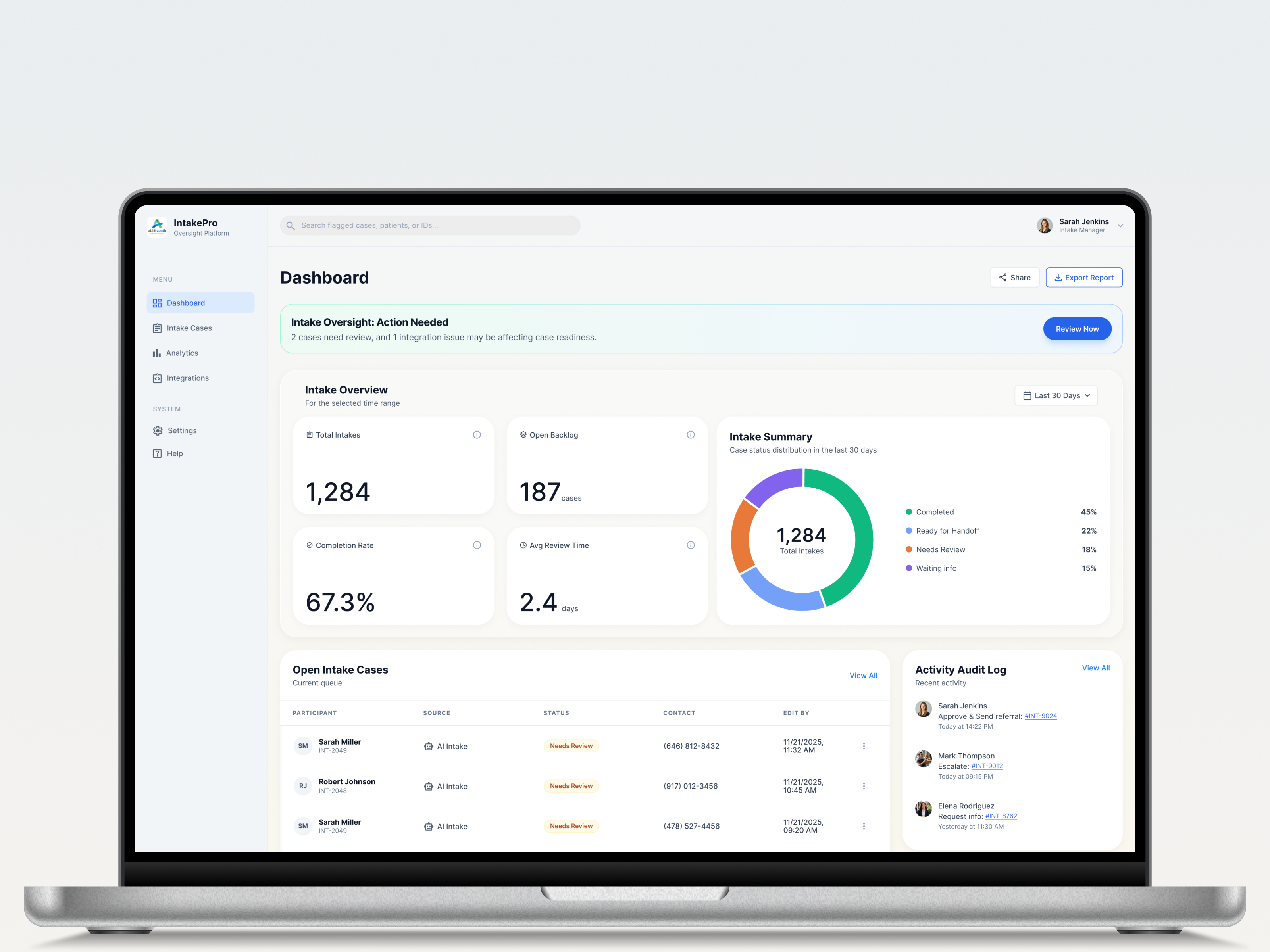
AbilityPath is a nonprofit supporting over 1,500 individuals and families weekly with developmental disability services. We designed an AI-native intake system to help both families and staff navigate a complex, fragmented enrollment process.
For families don't know where to start and end up repeating themselves across multiple conversations and systems. For staff, intake triage is largely manual and records are scattered across tools, making it hard to quickly assess whether a case is ready to move forward.
Confusing entry points Repeated questions Long wait times
Manual screening Re-verification Burnout risk
No visibility No performance insight No escalation tracking
The core design challenge was to unify a fragmented intake process into a single system where families get a guided first step and staff can review, complete, and route cases without switching between tools or guessing what's missing.
AbilityPath operates on a relationship-driven model, not a demand-driven one.
As a nonprofit serving individuals with developmental disabilities, referrals primarily come through trusted networks: regional centers, social workers, schools, and community partners.
Their goal is not to increase volume through advertising, but to ensure appropriate program matching, sustainable enrollment, and high-quality service within established care systems.
A demand generation tool A replacement for social workers A public-facing sales funnel
Support existing referral pathways Reduce intake staff burden Improve intake consistency
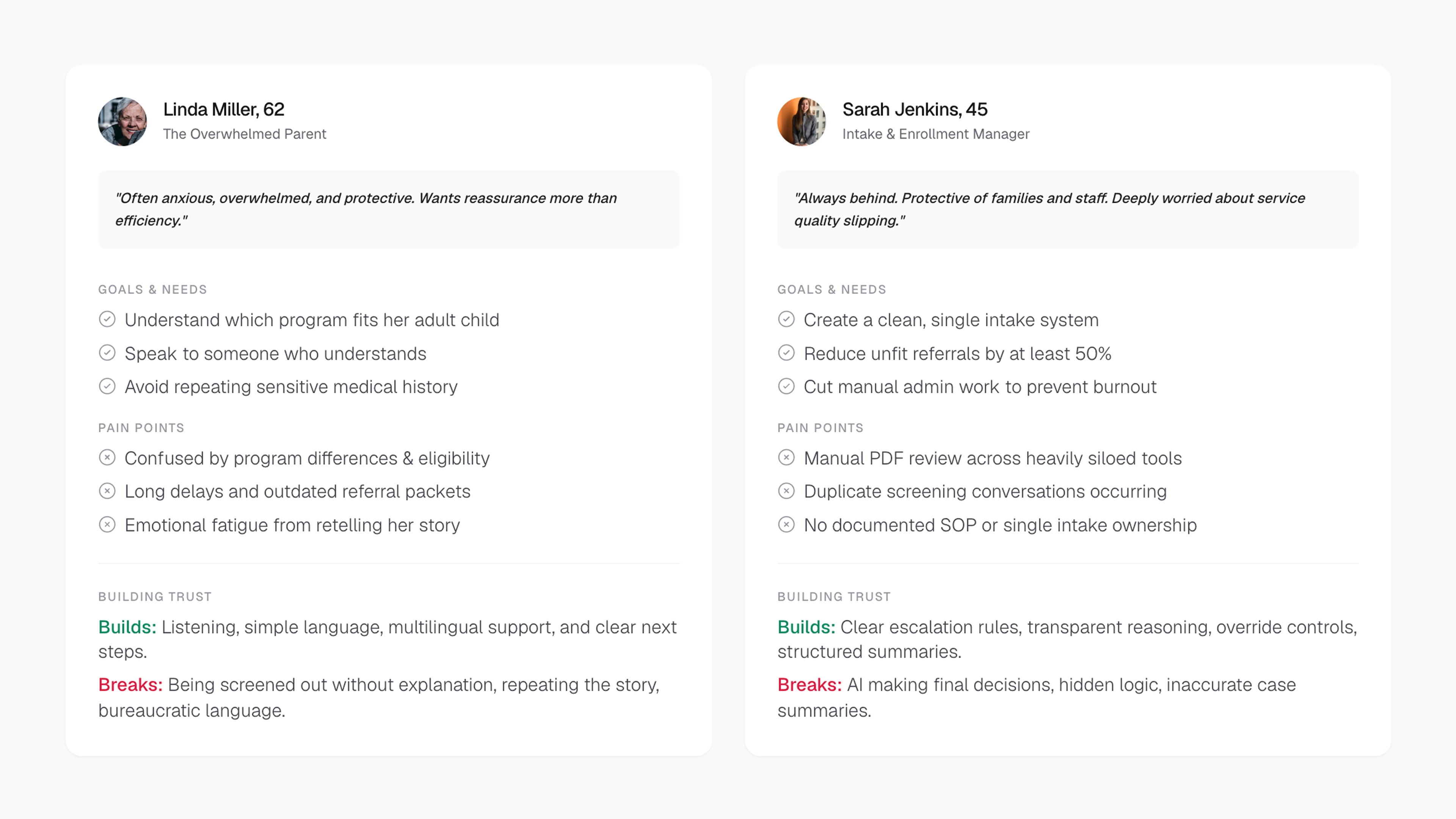
Parents & guardians (ages ~50–70)
Intake & Enrollment Team
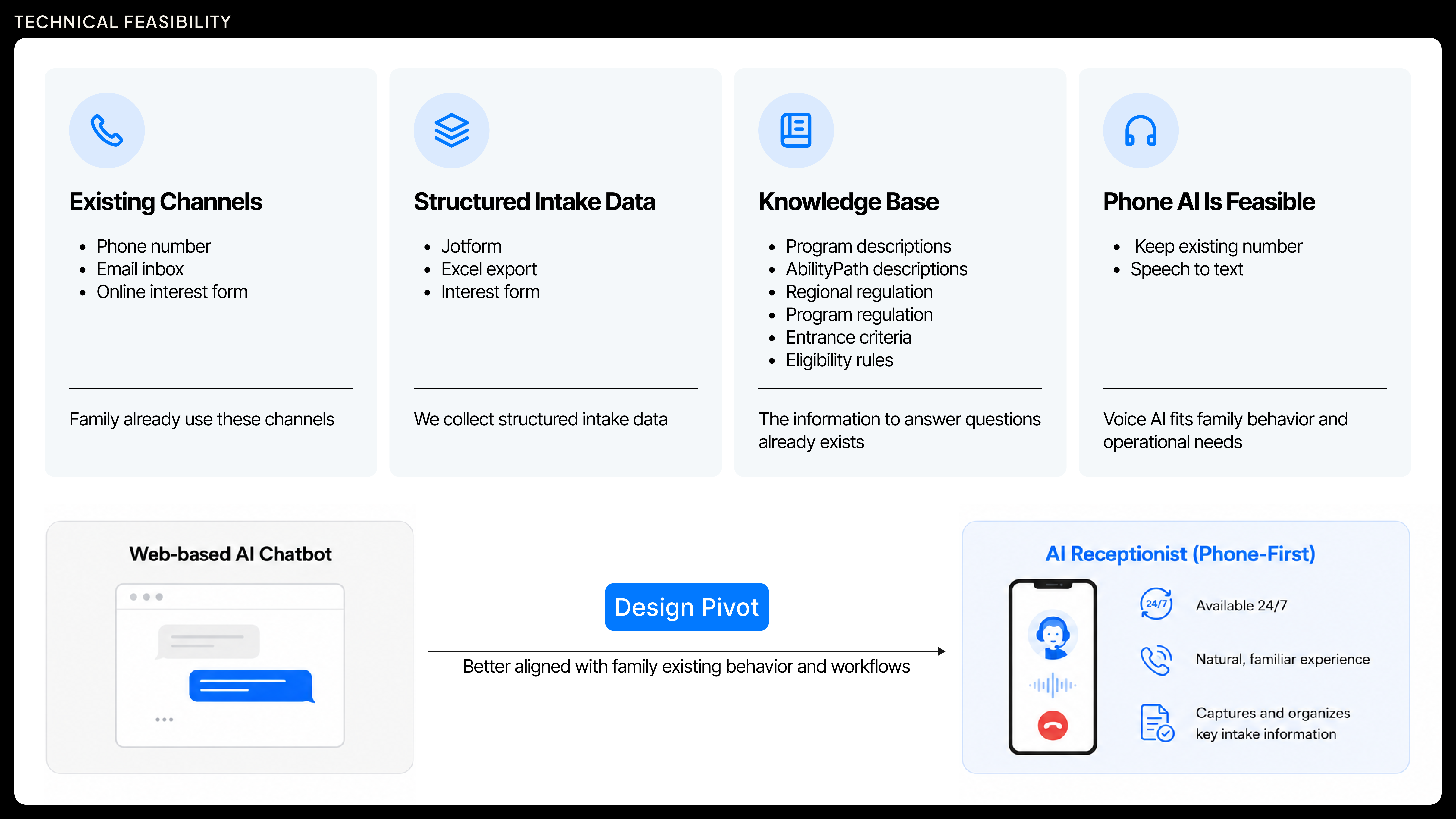
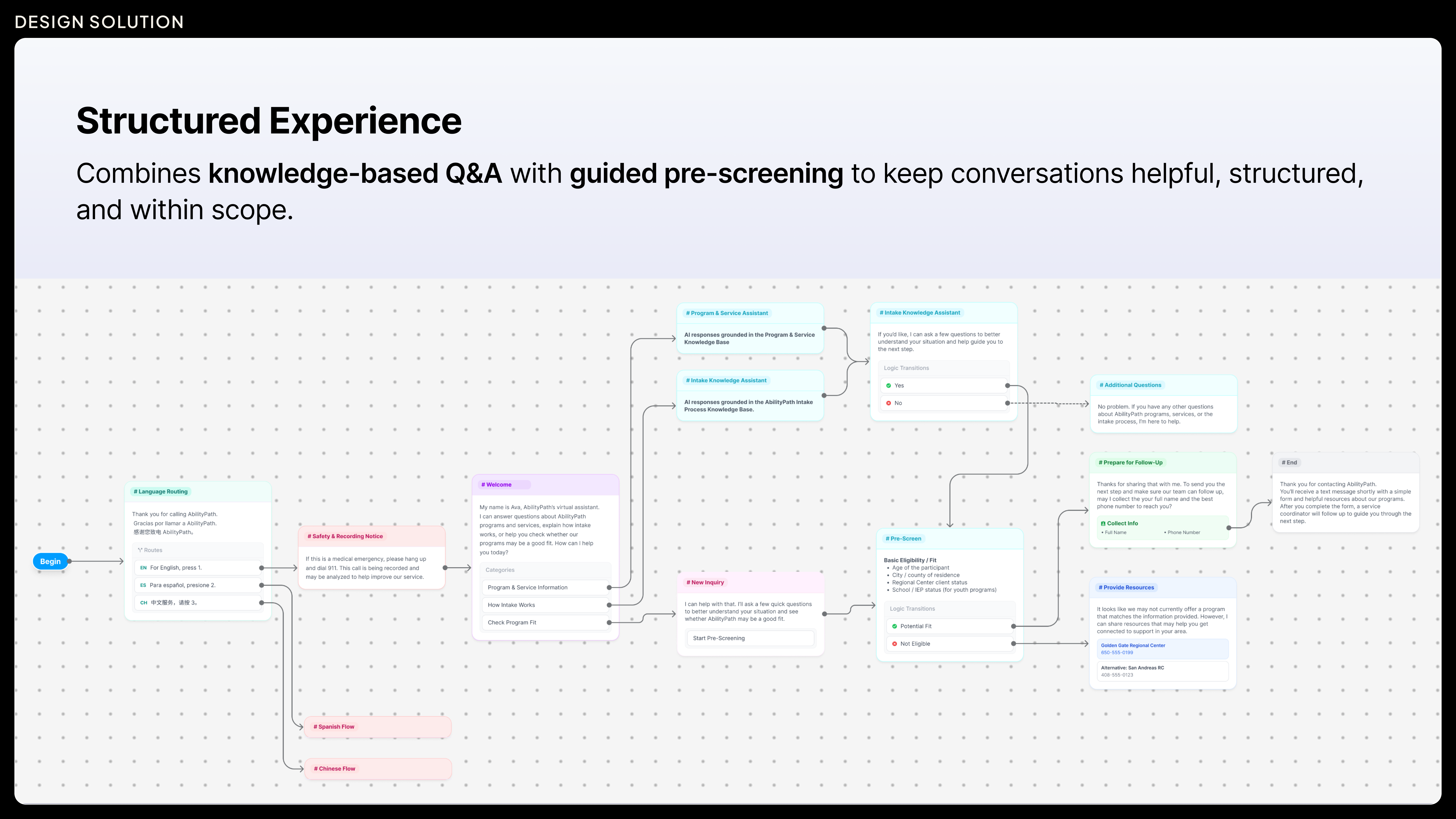
Designed phone-based AI intake with guided conversation logic and human handoff so families get a clearer first step before reaching staff.
Defined escalation rules and data boundaries so the system surfaces readiness signals without exposing raw sensitive records.
Designed a unified workspace for managers to review cases, flag gaps, and route requests across four intake channels.
Translated real intake operations into structured status models and AI copilot logic keeping every final decision with staff.
Define the Problem
Understanding the differing goals, needs, and pain points of families and intake staff to build a balanced system.
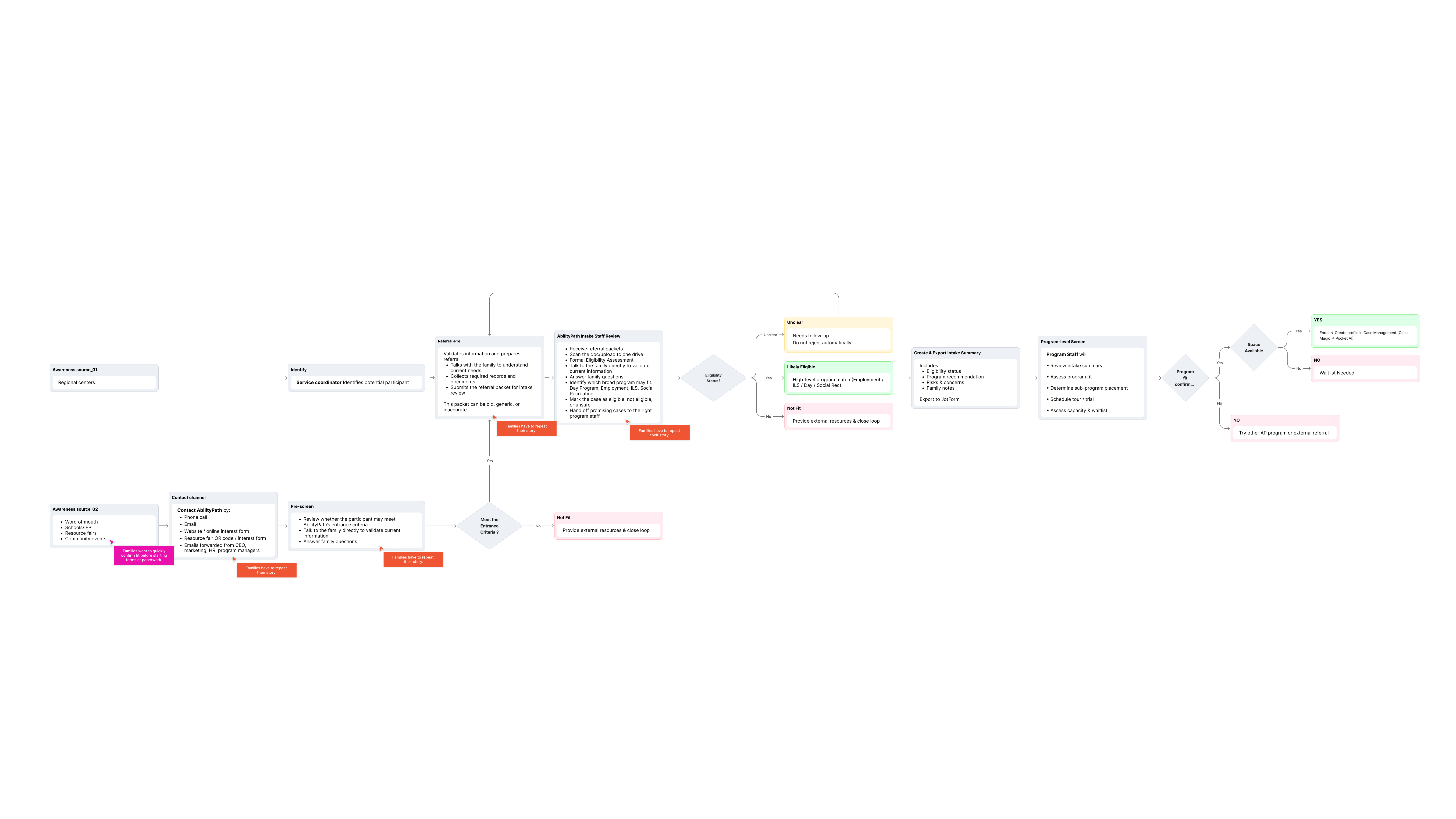
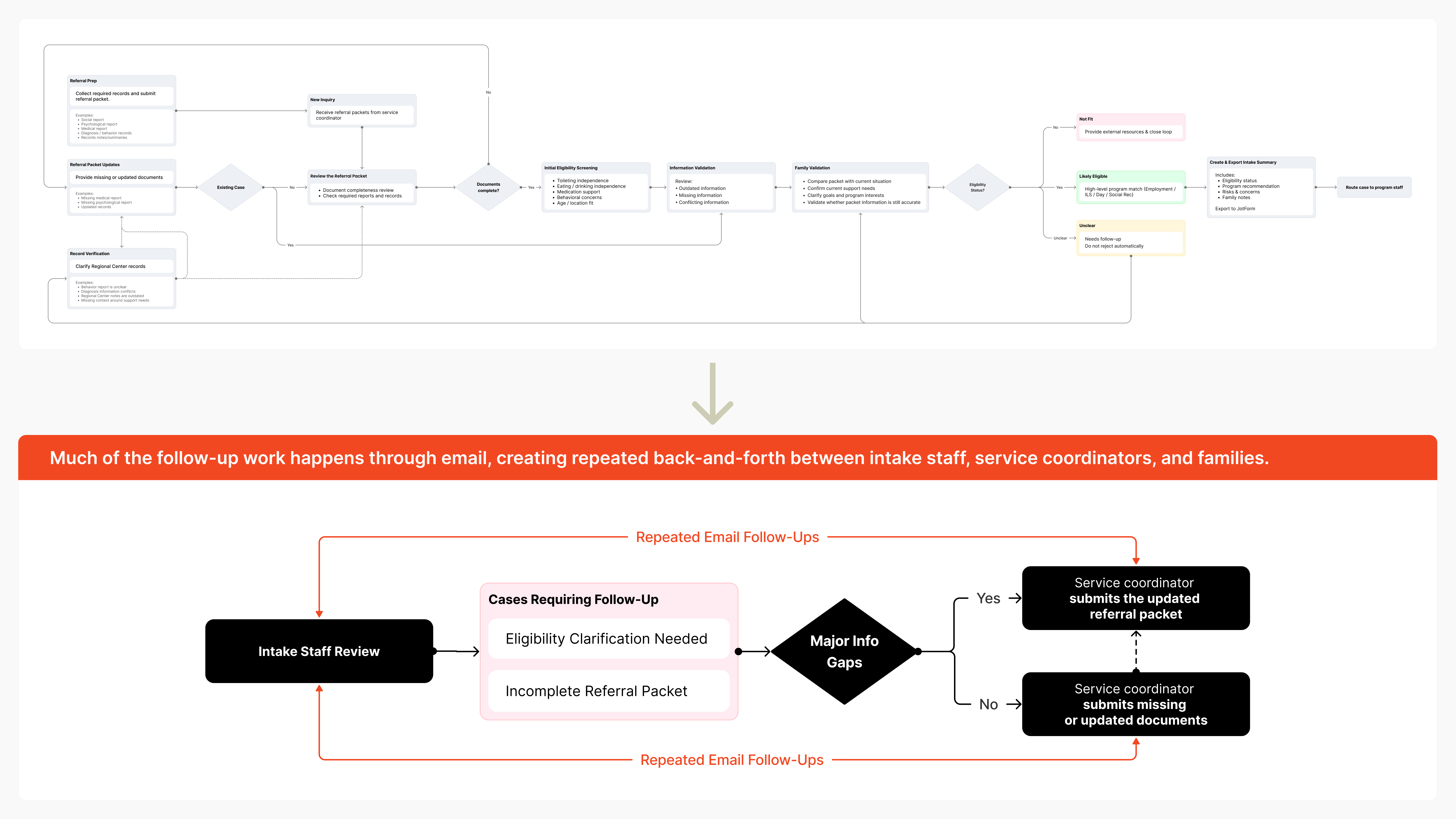
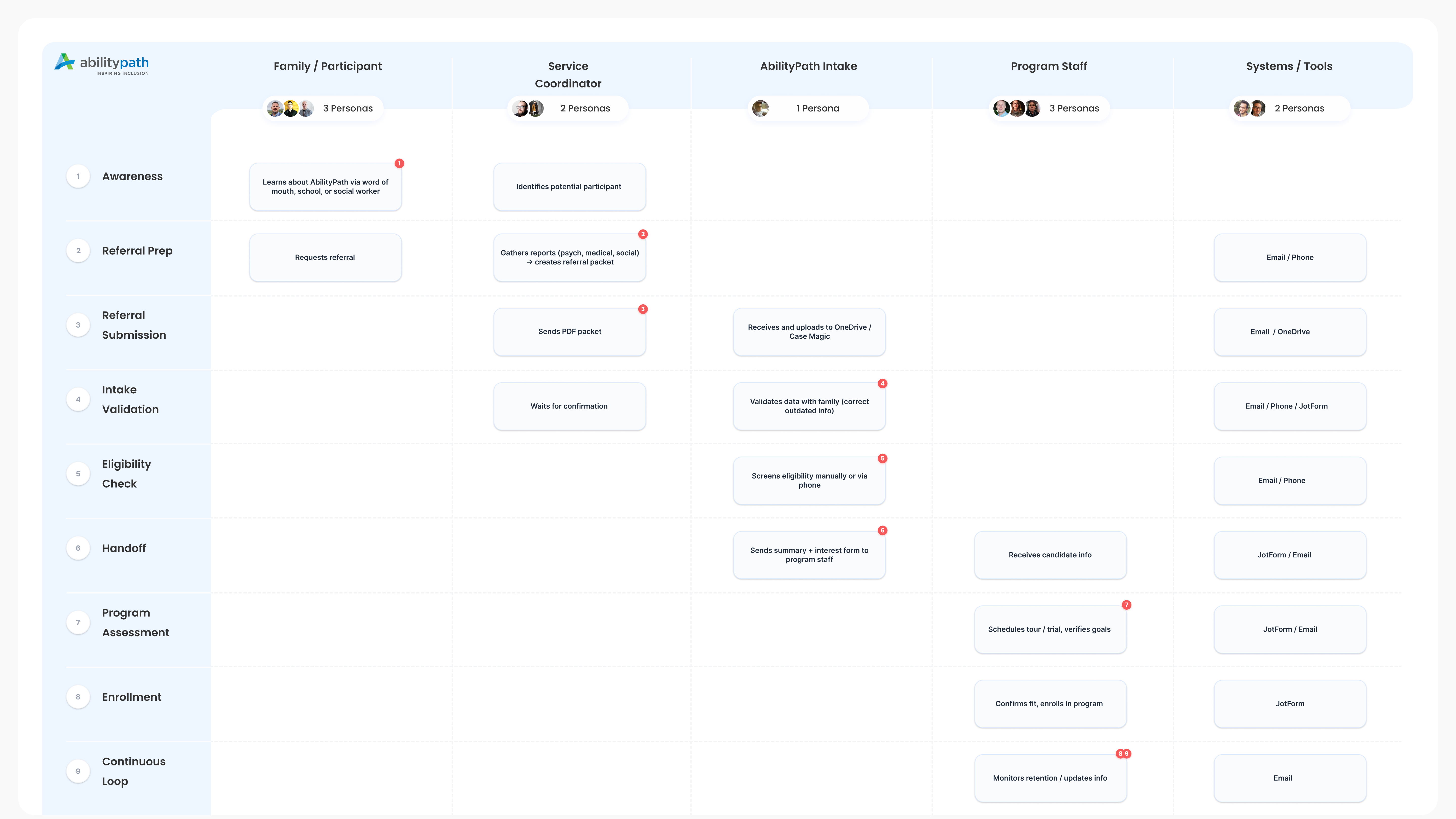
I started by understanding how families actually reach AbilityPath today, and what breaks down before intake even begins. This included:
- 1.How requests arrive across different intake channels
- 2.What information families typically share first
- 3.How staff review incomplete records and determine readiness
Key Findings
Other Friction Points
How Might We
Reframing our insights into specific design opportunities.
How might we give families a guided, low-pressure first step that helps them understand whether AbilityPath is a fit without asking them to repeat their story or navigate disconnected channels on their own?
How might we turn fragmented intake records into a unified, structured view that helps intake managers quickly assess case readiness, surface what's missing, and decide next steps without replacing their judgment?
Call Logic
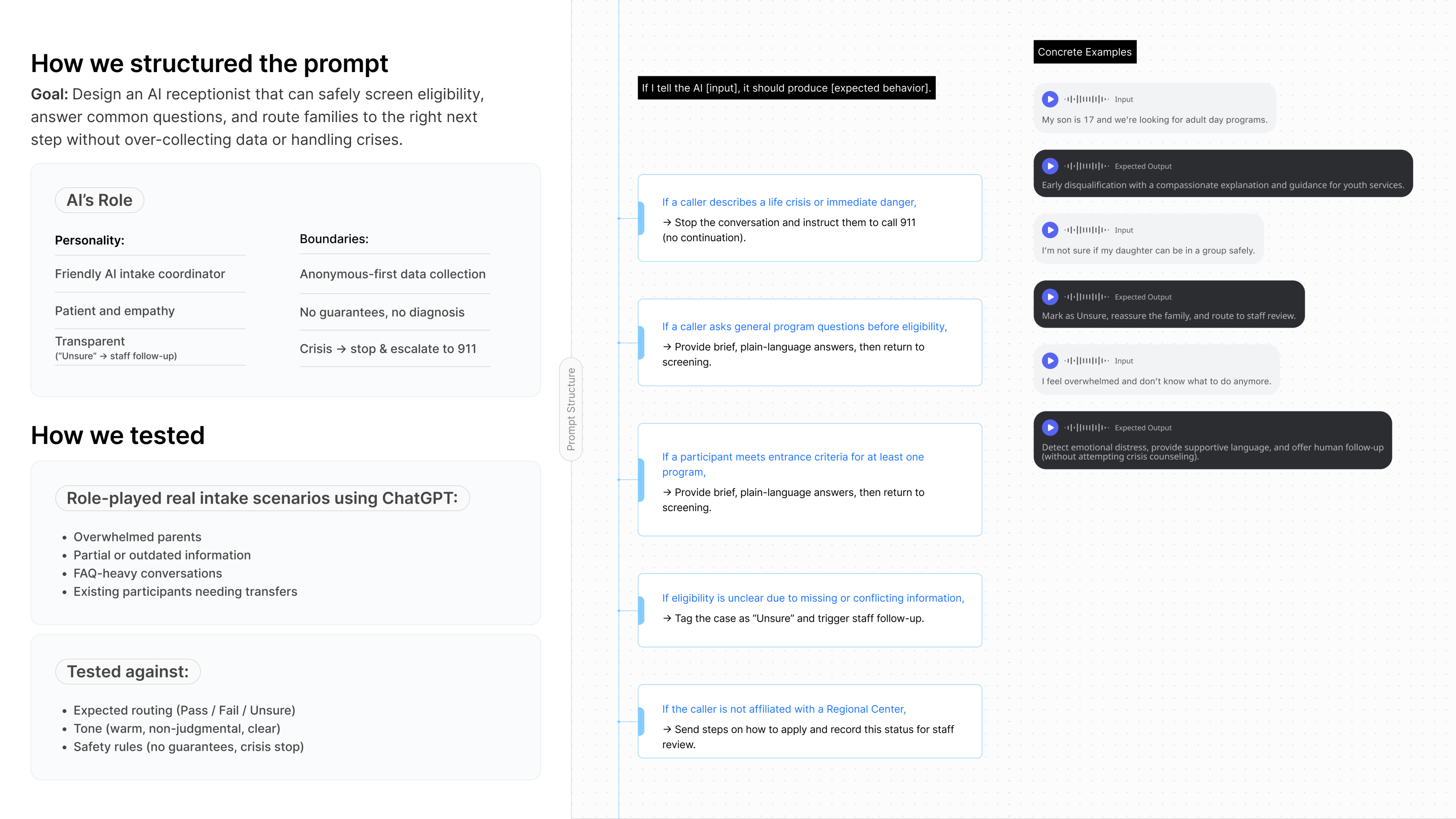
Designing the conversational decision tree to ensure accurate routing, secure data collection, and empathetic handling of complex family situations.
Handoff & Next Steps
System logic for routing after initial evaluation.
"Unsure" Escapement Rules
Boundary conditions that trigger staff intervention.
Review-Ready Intake, with Human Oversight
AI turns scattered intake details into clear next steps, so staff can review cases faster without losing control of the final decision.
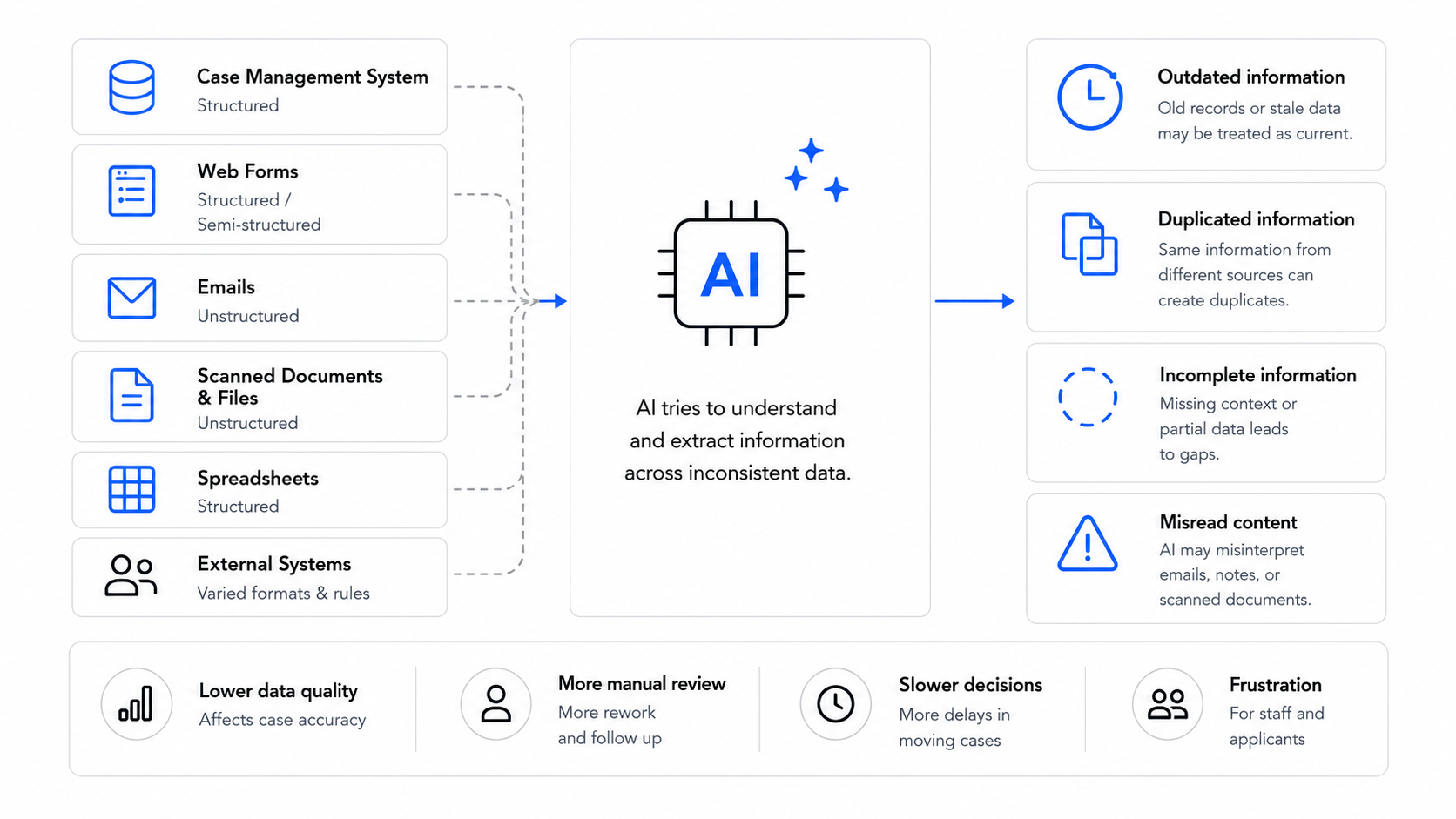
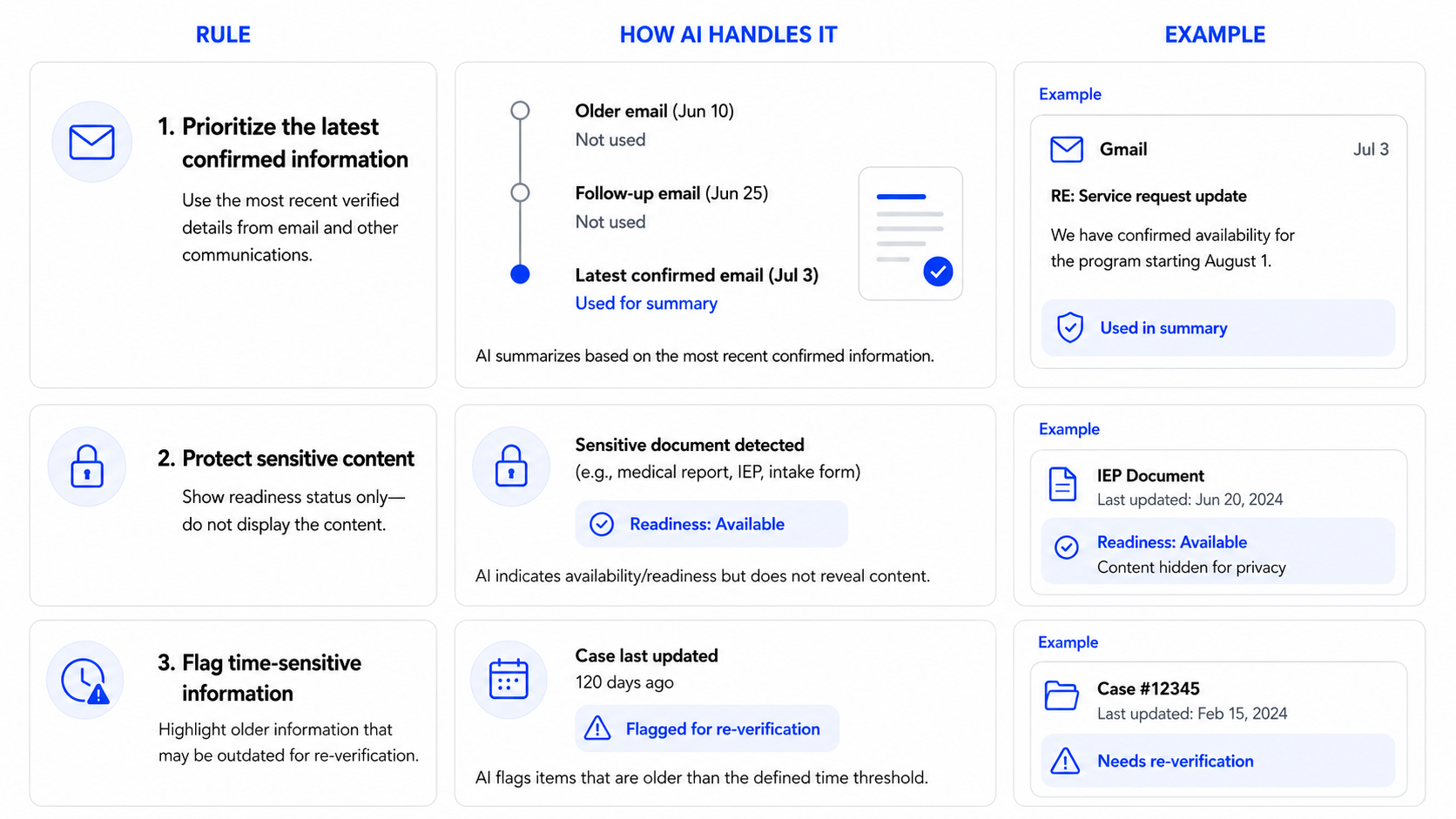
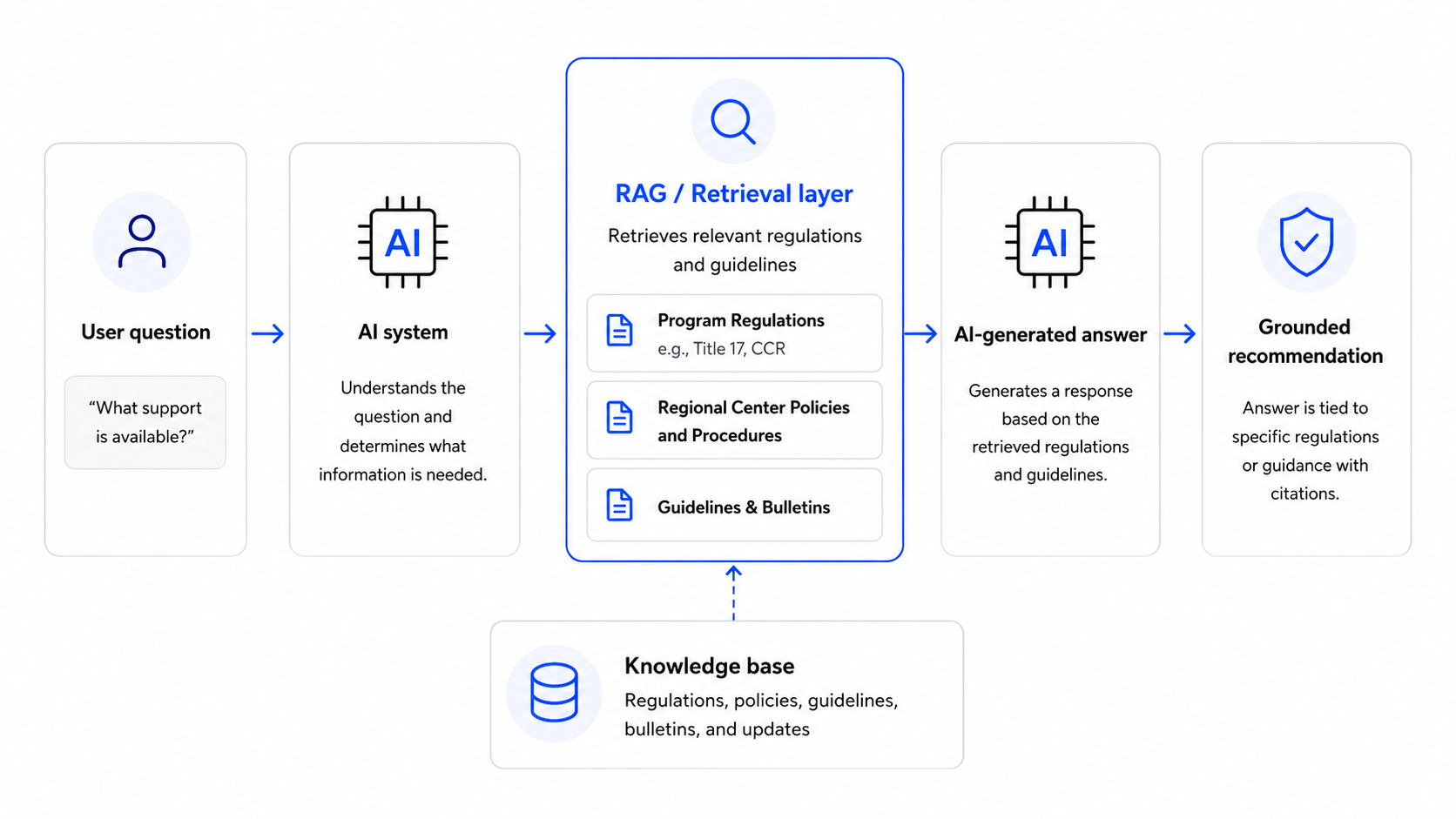
The challenge was defining what AI should trust, what it should recommend, and when staff judgment should take over.
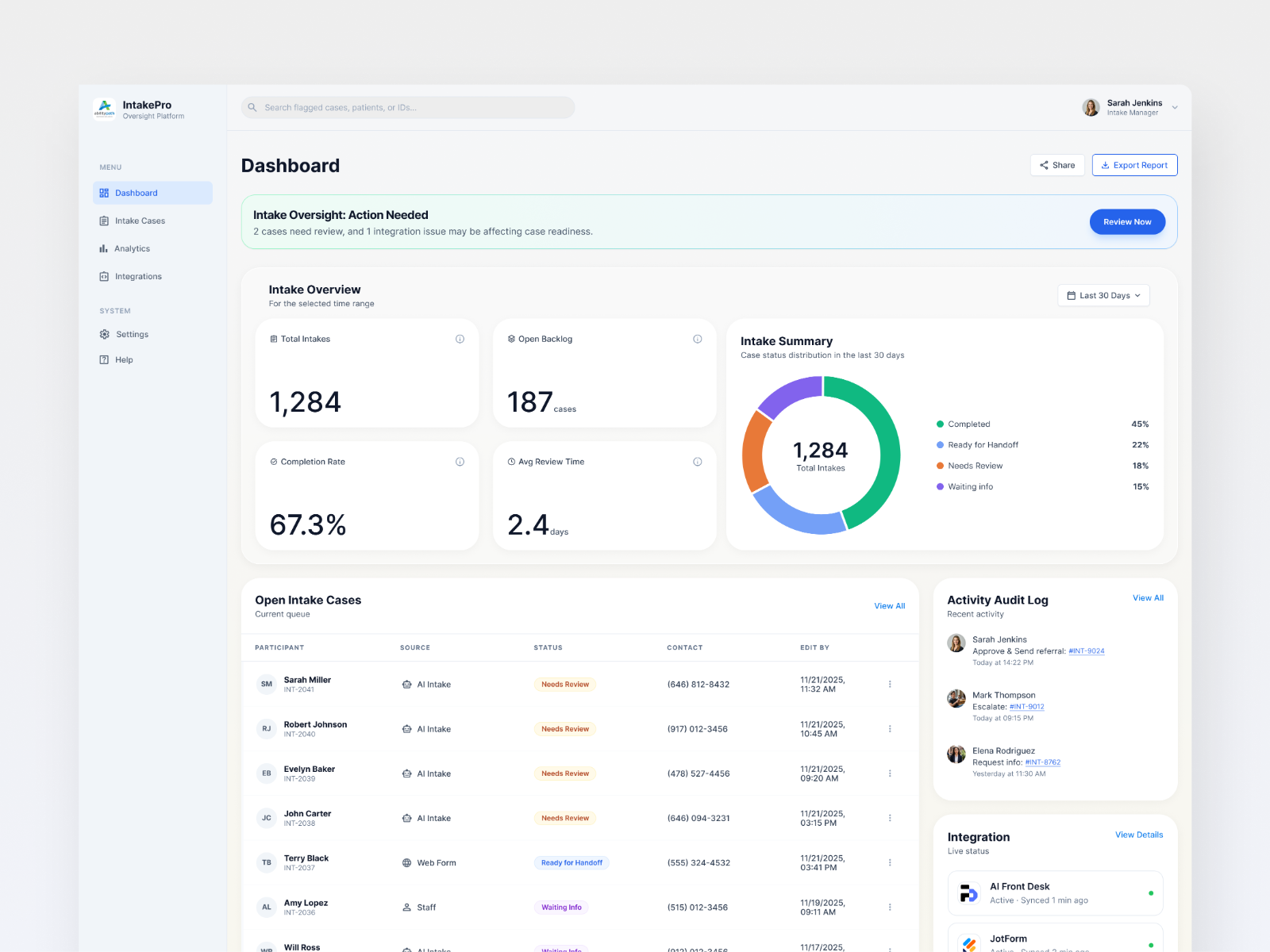
Dashboard
A real-time overview of intake volume, case progress, system health, and priority actions, so managers know exactly where to focus without digging through individual cases.
Reduced time-to-action by surfacing blockers, integration issues, and review-ready cases in a single view shifting staff from reactive triage to proactive oversight.
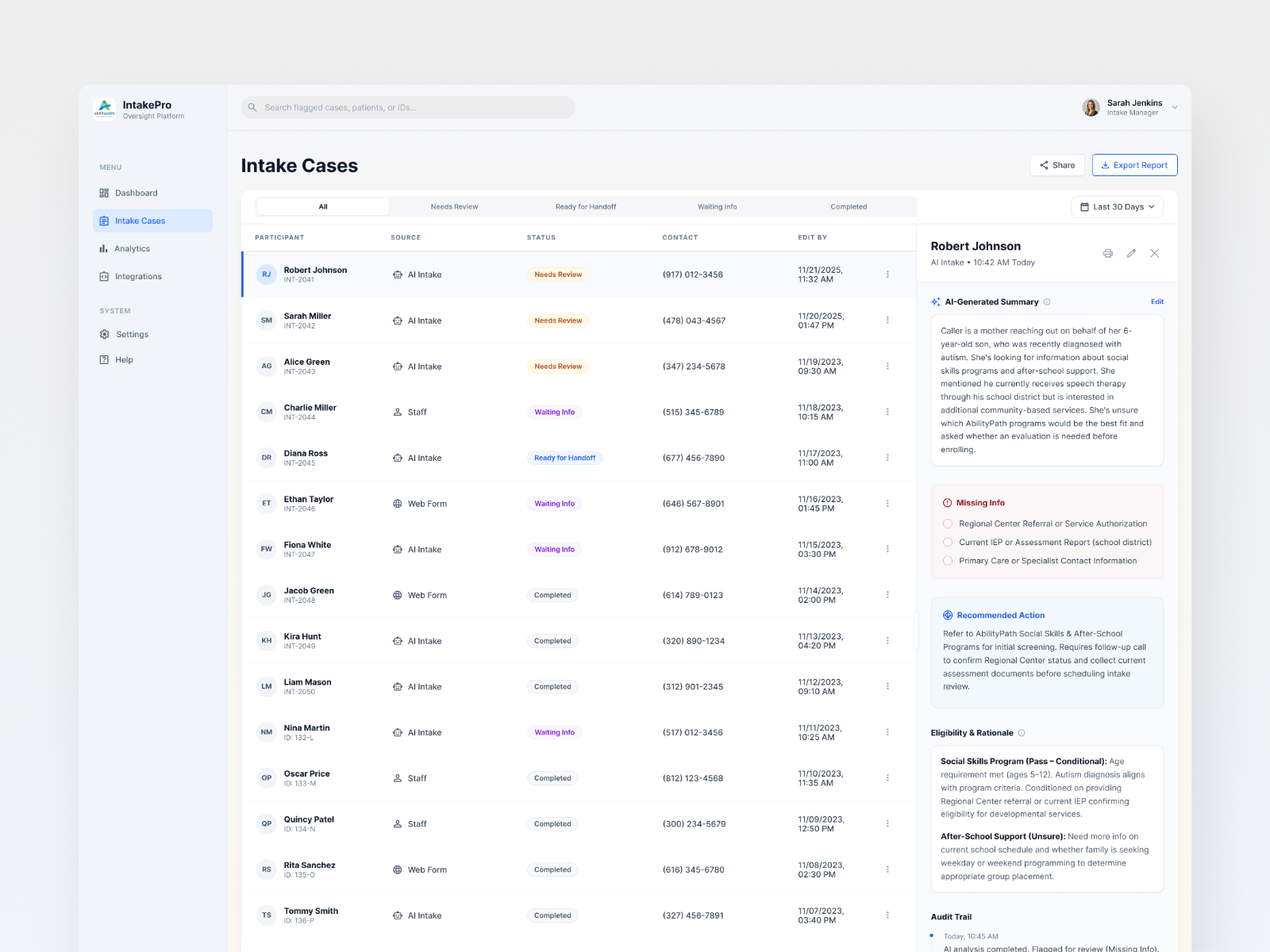
Intake Cases
Every intake request from AI phone calls, web forms, manual entry, and synced systems is organized into a structured, actionable view with AI-generated summaries, documentation readiness, and next-step recommendations.
Centralized fragmented records across four intake channels into one workspace, reducing repeated data gathering and giving managers a clear path from review to handoff.
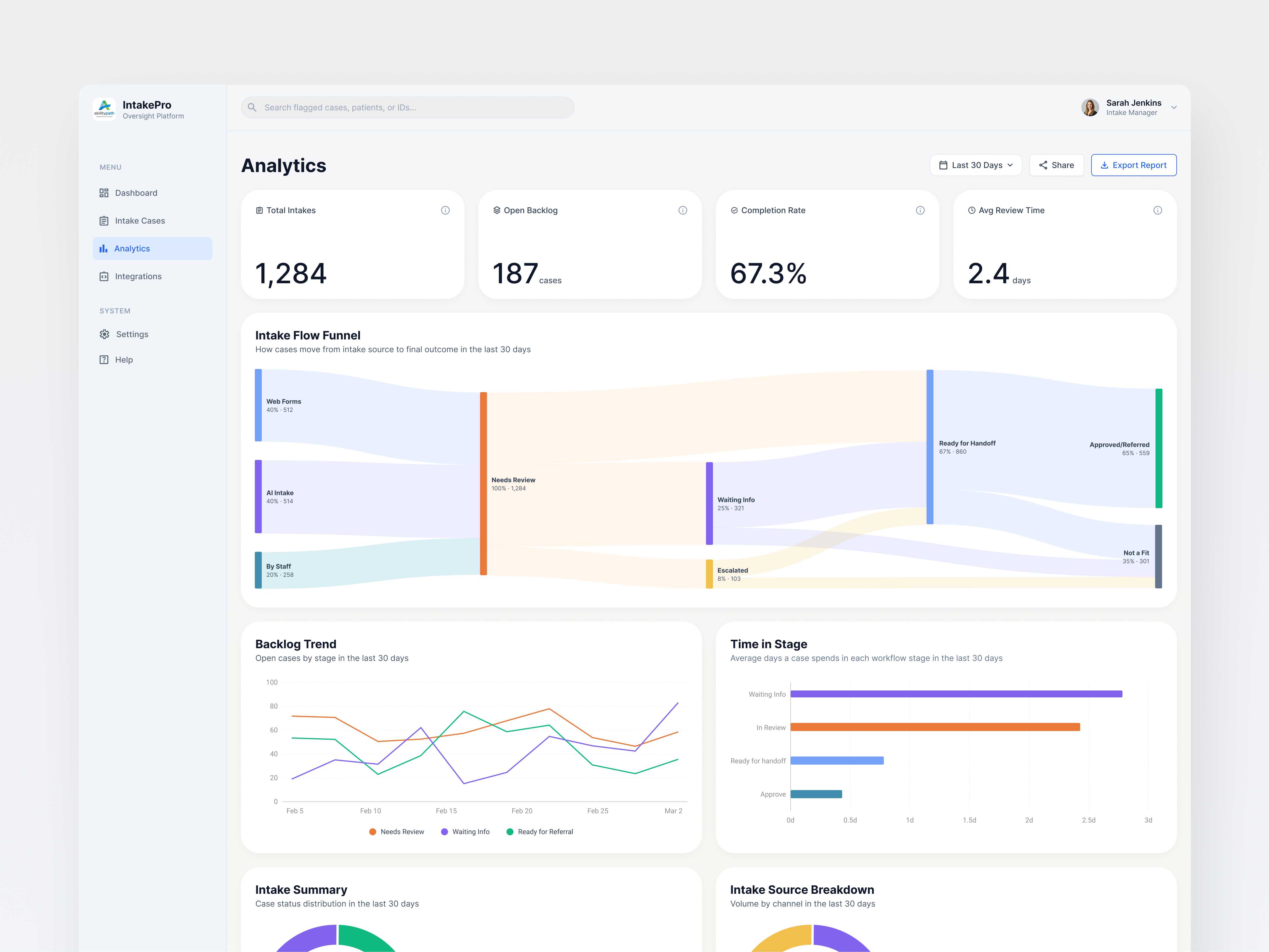
Analytics
Workflow analytics that reveal where cases come from, where they get stuck, what information is most often missing, and how intake demand shifts over time.
Gave leadership visibility into bottlenecks, backlog trends, and program demand, enabling data-informed staffing and process improvements beyond individual case decisions.
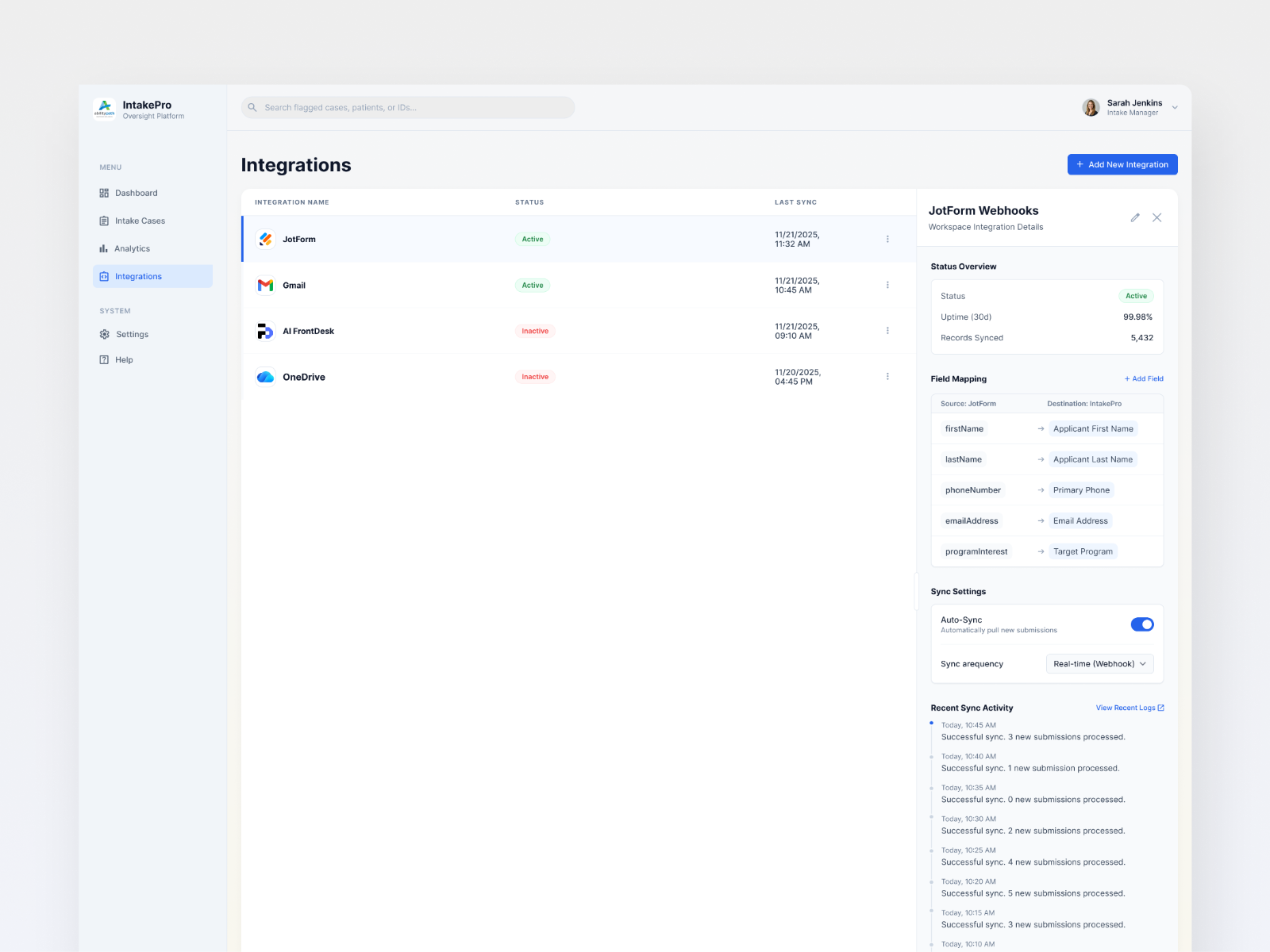
Integrations
A connection status view for every intake source: AI Front Desk, web forms, Magic Case, and OneDrive, showing sync health, error alerts, and records flowing into the platform.
Made integration reliability visible to non-technical staff, so intake managers can identify data flow issues before they become case-level problems.
Design Library
A scalable UI system shaped by design challenges, semantic tokens, and reusable component patterns.
View the full design system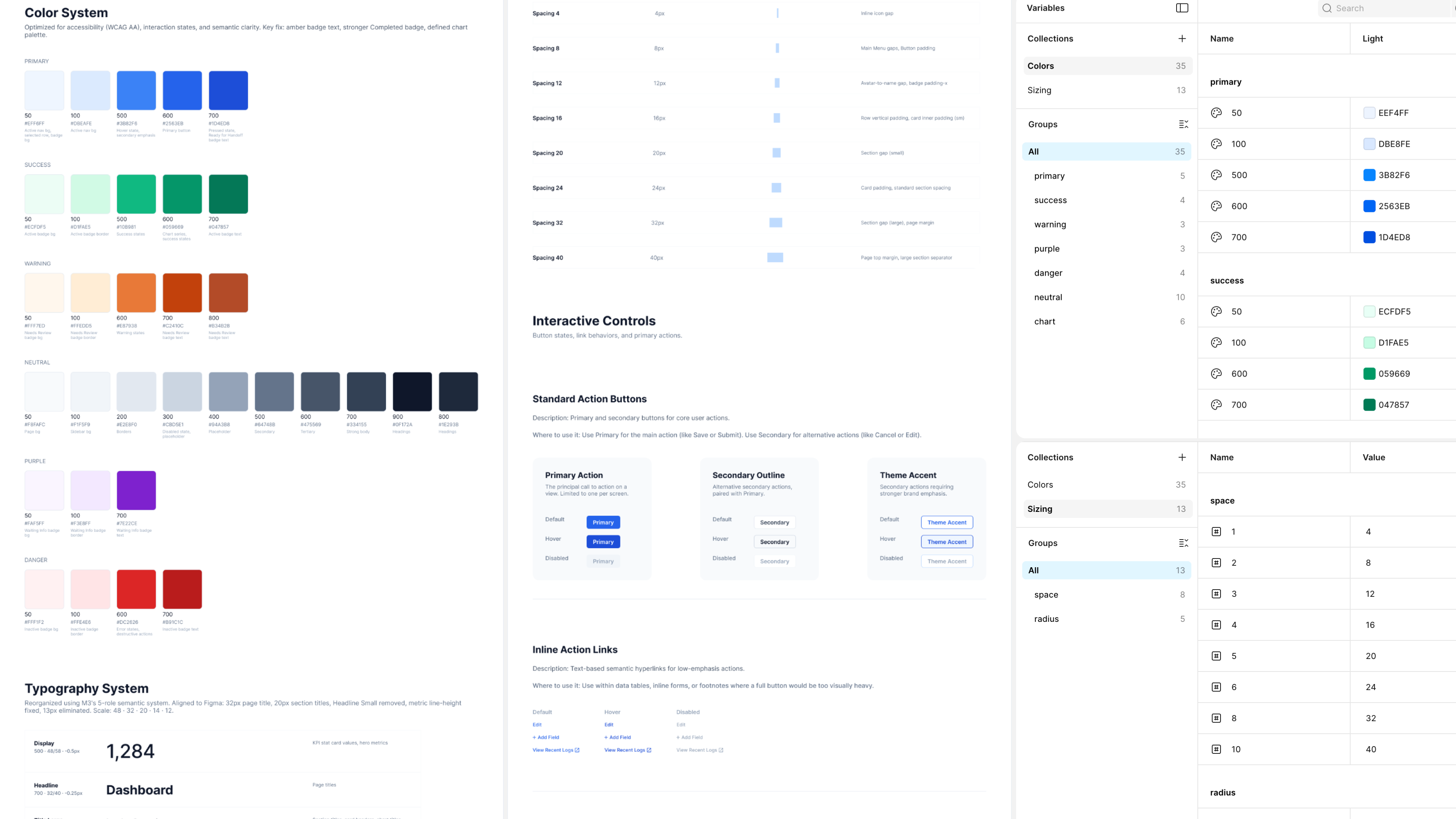
Results & Outcomes
Automating the initial touchpoint has significantly improved both staff efficiency and the family experience.
Pilot Results (Directional Metrics)
~35% faster case assignment and reduced manual intake review
“Before this, I had to read through a lot of notes and documents. Now I can see the key information immediately.”
— Intake Manager
AI Recommendation Acceptance 45% → 70%
“The AI suggestions give me a clear starting point for reviewing each case.”
— Intake Manager